
The Toolkit – Step 4
Towards Mastery
Questions
- How is the change progressing?
- What learning needs are emerging?
- Are we adequately addressing these learning needs?
- Are stakeholders hearing the 5 change readiness messages?
- Is the level of support adequate for each stakeholder?
- Are blockages to progress identified & removed?
- Are stakeholders experiencing short‐term wins?
- Is success recognised in tangible ways?
- Are struggle, failure, & setbacks normalised as part of the change process?
- Are stakeholders encouraged to take risks?
- Do stakeholders feel safe?
Tasks
Monitor Progress
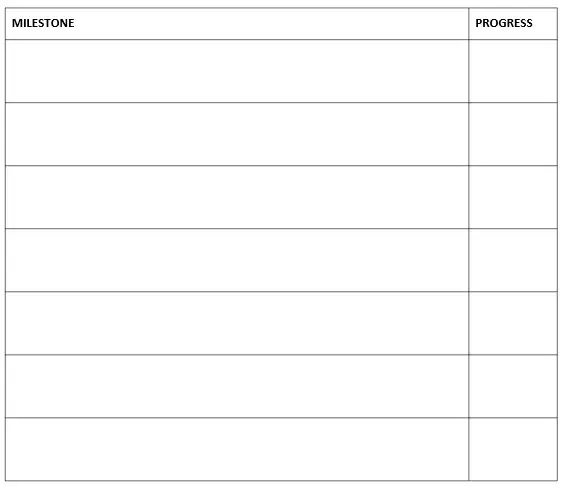
Having previously established milestones for relevant stakeholder groups, you need to monitor how these are being achieved. List the milestones you created in Step 2 (and any others since then) and determine how these are being met. Remember, you are assessing stakeholder outcomes here (the behaviours that demonstrate successful completion of the milestones).
Use the following legend to designate progress so far:
Adjust change plans
Be flexible with your change plans. They are meant to be a guide, not a rulebook. When you get into Steps 4 and 5, it becomes evident that some milestones may have been unrealistic, or even unachievable. Others may be achieved sooner than expected. And there may be others that you hadn’t foreseen, but now you can see they are needed.
Leverage Strengths
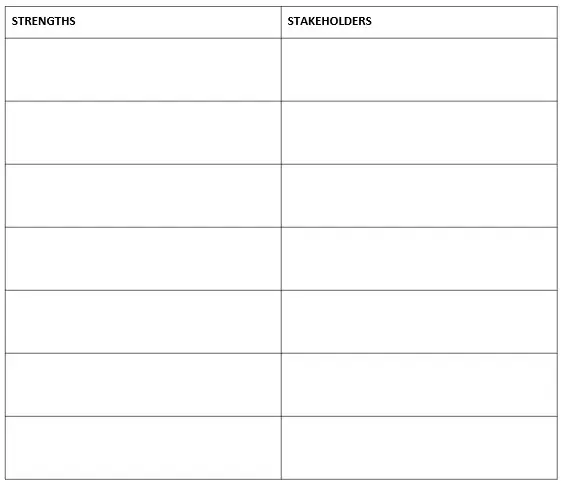
Stakeholders bring a variety of strengths to your change project, and these should be utilised as fully as possible at appropriate times throughout the change process. These strengths include relevant skills, specific knowledge, prior or related experience, and change fitness.
Specific change fitness strengths are particularly important at different points in the change process. If you have conducted the IRVEY® change fitness assessment, you should know which stakeholders have high change capacity.
In the table below, make a short‐list of key stakeholders and their relevant strengths. Refer to this list to ensure their strengths are being used.
Scaffold Limitations
We might not like to think about weaknesses or limitations, but the fact is we all have them and they need to be managed.
If the limitations can be easily overcome with training or coaching that imparts knowledge or develops skill, that training/coaching should be provided as needed. However, if the limitations are in the areas of personal change fitness or organisational change readiness, there may be no easy quick‐fix solution. In this case, managers need to build scaffolds around the areas of weakness.
Scaffolding may mean more direct involvement by managers or leaders, or it may mean out‐ sourcing help from non‐stakeholders who have the strengths that are lacking.
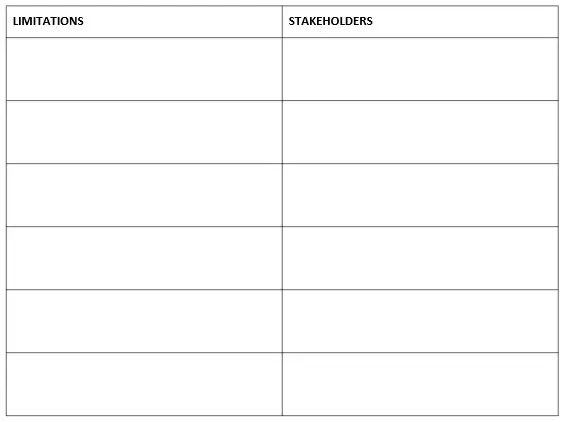
Scaffolding weakness or limitation is about managing risk. List any known limitations that should be managed carefully. If you conducted IRVEY®, include change fitness limitations.
Monitor and Support Learning Needs
As mentioned in the previous point, learning needs are limitations that should be addressed at appropriate times.
Change is difficult because it often places people outside their comfort zone where they are expected to learn new things and develop new behaviours. You should pay close attention to how people are progressing and listen for any indications they need support. In Steps 4 and 5, and especially in Step 4, people may make mistakes and experience setbacks as they learn. This is to be expected and is normal, but these are also learning opportunities and you should make the most of them. Get beside the person and help them learn the lessons that will eventually lead them to success.
What training or support do you think people might need in Step 4? Make a list.
Model Adaptive Behaviours
People learn and refine behaviours as they observe what takes place in social settings. It is therefore critical that adaptive change behaviours are clearly visible and consistently modelled throughout the change process.
Since managers and leaders have direct impact over their teams, it is most important they are high in change fitness and model change fitness behaviours and attitudes to other stakeholders. Remember, change fitness behaviours cannot be faked. They are a natural expression of psychological strength, not simply a set of behaviours that can be learnt and tacked‐on.
Write down some ideas of how to highlight change strengths in your workplace settings. For example, you could use success stories as case studies or exemplars to accentuate a point. The point is that you want to make the most mileage from good examples of adaptive behaviours so they become as visible as possible to as many stakeholders as possible.
Repeat the 5 Change Readiness Messages
As we have seen in Steps 2 and 3 of the change process, it is very important to repeat the 5 change readiness messages:
- This change is needed
- The strategy will work
- Together we can do it
- You will be fully supported
- It will be worth it
Reinforce the idea that the change is needed, it is achievable, and it is worth the struggle. During the difficulties of the change process, people need to hear there’s a purpose to their struggle, that they’re making progress, and that better times are coming. Even if they don’t believe it, the repetition of this message helps create belief.
You must make sure these messages are genuine. You will undermine trust if you say things you don’t mean or don’t follow through on.
Write down how you will get these 5 messages across.
Identify and Remove Barriers
Although this approach to managing change is strengths‐based, that doesn’t deny that barriers to change exist and you should do what you can to limit them.
Barriers to change can come from within the person and/or within the environment. Intra‐ personal barriers include low change fitness, and this can be improved directly through change fitness coaching and indirectly by modelling. Another issue to consider is immunity to change. To learn more about immunity to change, read Robert Kegan’s book on the topic.
Environmental barriers may include cultural barriers, policy and procedural barriers, inter‐ personal conflicts, poor success with past change, etc.
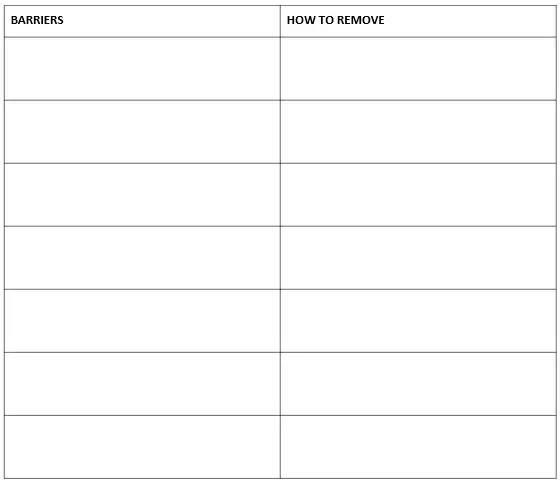
In the table below, list any barriers you can see and how you could remove them.
Recognise Success
The successes of stakeholders should be recognised, at least from time to time. It is not necessary to recognise every small win, and to do so may be detrimental as it could promote external motivation over internal motivation. However, it is good to encourage people and recognise their efforts and achievements.
Recognition may be intangible (such as verbal or written) or tangible (such as an award). Make a list of intangible and tangible ways to recognise success.
Generate Short‐Term Wins
Especially during Step 4, stakeholders need to experience short‐term wins. As they work towards the milestones, create many smaller tasks with which people can find relatively easy success.
Remember that a change project is a combination of many smaller changes (tasks), so it is important to break the process down into small, achievable steps. If you find people are struggling and having many setbacks, you may be asking too much of them too soon.
Although setbacks are normal in change, this can be minimised by giving people a succession of small, achievable tasks.
Write down some examples of small, achievable tasks you could ask stakeholders to work on.
Manage Resources
You should manage allocated resources to ensure proper delivery. This could include the time allocated to any given milestone or each step of the change process, allocation of funds spent on training, or any other resourcing needs.
This management of resources needs to be monitored, so you should ensure there is a process to do this and a clear line of responsibility.
How will resources be monitored? Who will have responsibility in this area? Write down any ideas below.
Maintain a Safe Environment
You should maintain an environment where it is safe for stakeholders to take acceptable risks and attempt to innovate and learn. Don’t punish people for being creative or for trying out new approaches as they develop new behaviours and skills. This doesn’t mean accepting reckless behaviour, but it does mean allowing for mistakes as people learn and grow.
How can you achieve this in your workplace?