The Toolkit – Step 3
Towards Preparation
Questions
- What should each stakeholder group do to prepare for the change?
- Who will form the change management group? The governance?
- What will success look like?
- What training, coaching, or mentoring is needed?
- Do all stakeholders understand the nature of the change process?
- Do all stakeholders feel ownership of the change project?
- How change‐fit is each stakeholder group?
Tasks
Assess Change Fitness
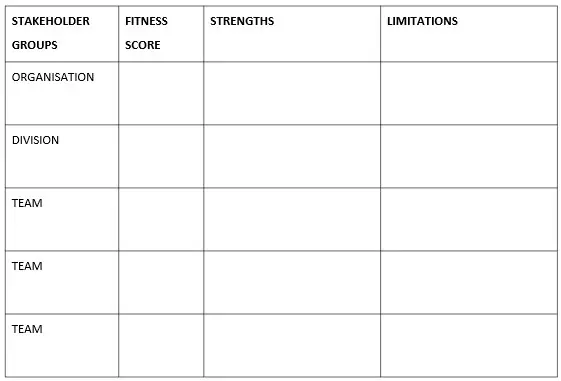
Each step of the change process makes psychological demands on people. Sometimes, these demands are very challenging, and without the right kind of psychological strength, people often get stuck or give up. These psychological strengths are known as ‘change fitness’.
There are 3 main things that change leaders should know about the change fitness of stakeholders:
- The change fitness of your stakeholder group(s). If the change fitness is low, leaders will need to account for that limitation during the change process. It could mean that success will take longer to achieve, and stakeholders will need more support as they engage in change. Conversely, if change fitness is high, change should be easier to achieve.
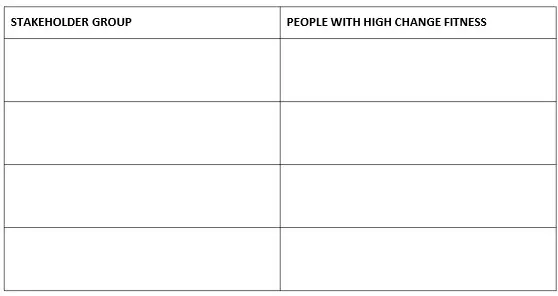
- The key agents of change. People with high levels of change fitness are naturally good at change and it is important to identify these people early and engage them fully during the change process. These people will be good role models for others to follow, but you must ensure they are fully on‐board. Ensure that all designated leaders have high levels of change fitness.
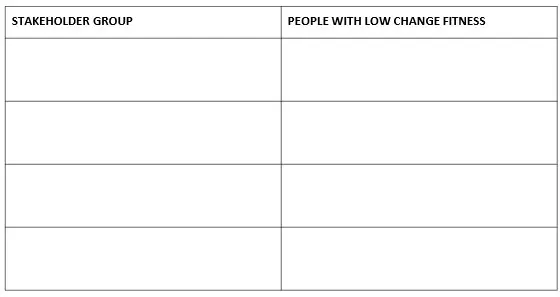
- Those with low change fitness. You need to know who these people are because low change fitness is related to a high risk of failure. People who lack the psychological strength to handle the change process are more prone to disengagement and resistance. These people don’t need to be punished – they need to be supported and strengthened.
Establish the Vision and Business Case
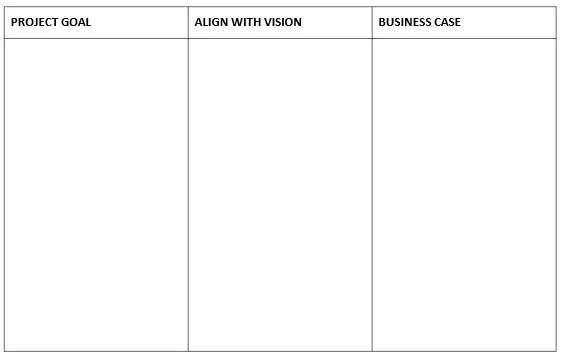
You need to know what the goal of the change project is, how it fits into the organisation’s vision, and the business case for the project. In some situations, this may be decided by senior management and in others it may originate from lower down the organisational structure.
In the table below, write down your understanding of the project goal, how it aligns with the larger vision, and the business case for the project.
Establish Governance and the Change Management Team
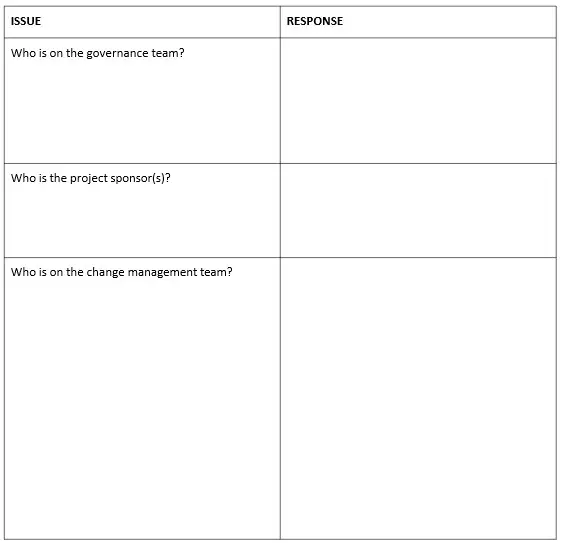
Who will form the change management team, who will be the sponsor, and who will be responsible for overseeing the change project from start to finish? Also, how will information flow between these groups – how will governance learn what is happening with other stakeholder groups, and how will their input be communicated to others? These issues should be considered, and appropriate decisions made.
Remember, it is especially important for those in leadership roles to have strong change fitness because they must lead by example and model adaptive change behaviours.
Fill out this information in the table below.
Define Roles and Teams
What roles must be allocated to support the project? Who will be allocated to these roles?
Think carefully about the roles needed and who is best positioned to fill them. For example, who would be good at research? Who is good at communication or planning? Who is good at conducting interviews and eliciting trust? Who is skilled at distilling complex information into an accessible visual format?
Identify the roles and teams needed for this project and list them below. When you can, write down who will be in the teams.
Identify Stakeholder Groups and Levels of Involvement
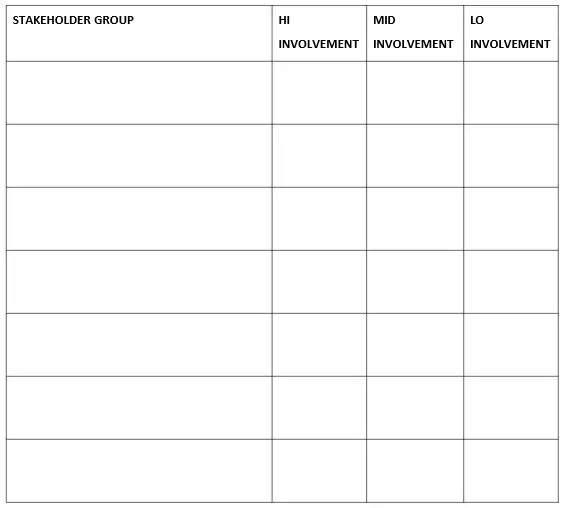
Some of the stakeholder groups may be related to the roles identified in the previous exercise. Some additional ideas – governance, change managers/leaders, team leaders, team members, suppliers, customers.
Stakeholders will be involved in, affected by, or able to affect the change to varying degrees. For example, a change project may directly involve a sales team, but have minimal effect on the HR team. It is important to identify how much involvement each group will have in the project because some stakeholders have greater project importance than others. Problems in a high involvement group are often more important than problems in a low involvement group. Use the table below to record this.
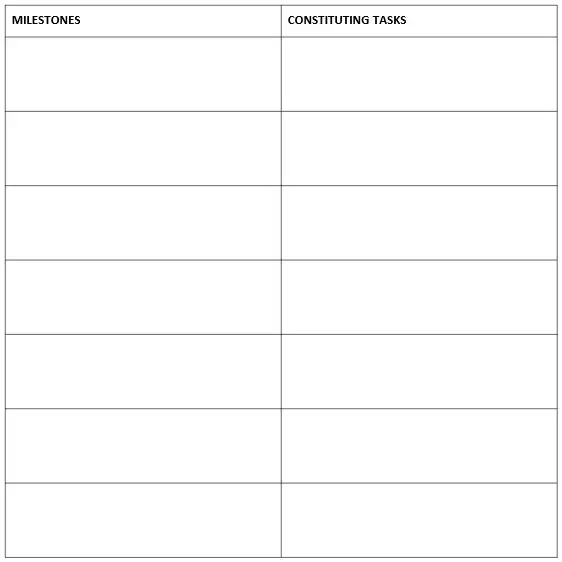
Create Milestones
A change project usually consists of many smaller change tasks. There can be many milestones along the way and there should be a logical progression through these milestones towards the final goal. Many of these milestones may occur during the implementation stages (Steps 4 and 5).
From the vantage point in Step 3, you may not see all these milestones, because many of them may emerge as you engage in Steps 4 and 5. However, it is good to identify as many as you can before you start implementing. Make a list of these milestones and the small tasks that constitute them.
Develop Policies and Procedures
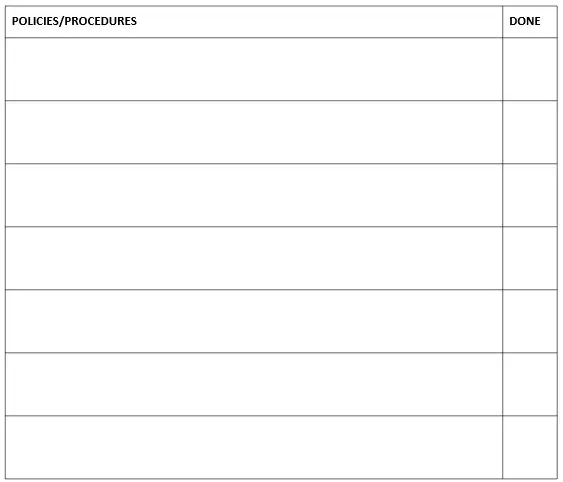
What policies and procedures are needed to support this change project? How much time will be allocated to the project? What expectations will be placed on stakeholders during the change? How will core business and service/product delivery be sustained while the change is implemented? How will competing change interests be managed? How will decisions related to the project be made?
Use the table below to identify as many policies and procedures as possible. You may need to add to this list when you begin implementing. Tick them off as you complete them.
Form Communication Plans
Communication about the change project should be an integral part of the overall change management plan and it deserves thoughtful preparation.
How will information flow up and down the organisational structure? What formal communication processes are needed? What controls are needed over informal communication? What kind of information should be conveyed? Who will shape the messages? How will the communication be delivered? How much information is enough, and how much is too much? When is the best time to communicate? What media are best suited to the task? How will stakeholders be informed about roles and expectations?
Remember to continually reinforce the 5 key change readiness messages throughout Step 3 of the change process.
- This change is needed
- The strategy will work
- Together we can do it
- You will be fully supported
- It will be worth it
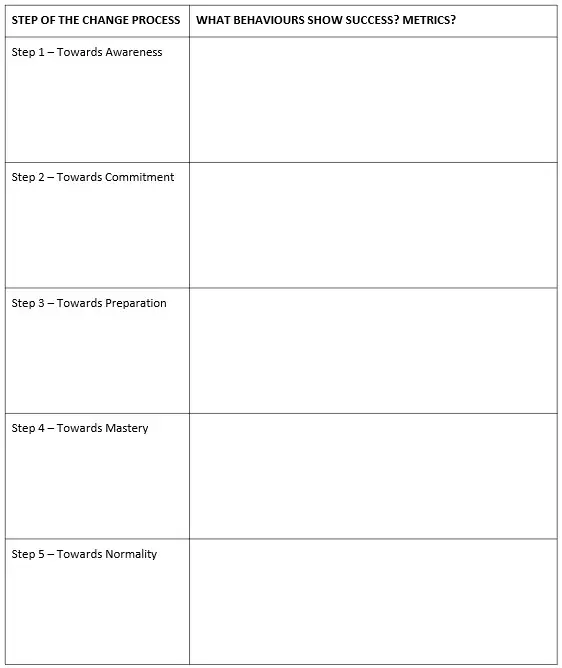
Establish Success Criteria
How will you determine success criteria for each step of the change project, and for each milestone along the implementation pathway?
You should think about what success looks like at each step of the change project and list the behaviours (outcomes) you are looking for. How will you measure these behaviours?
Decide on Rewards
It is important to acknowledge and reward successes along the change journey. What rewards could be provided? How would stakeholders attain them? How can you ensure recognition is fair?
Plan Training and Support
Stakeholders may require training to help them succeed at the change. Some of this training may be needed during Step 3, and some may be needed during Steps 4 and/or 5.
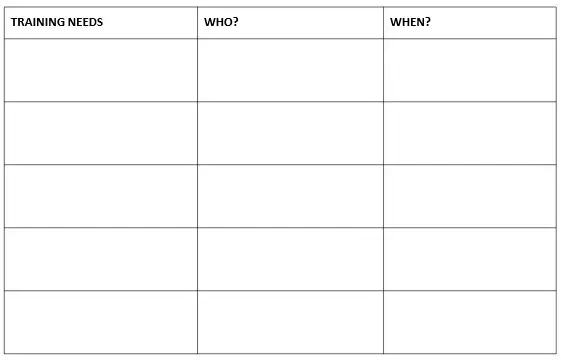
You should consider the barriers to progress, what training is required, who needs training, a training schedule, and who will deliver it. This may require a training needs assessment. What new knowledge and/or skills do stakeholders need for success?
Don’t just focus on operational needs: the task‐related skills and body of knowledge. Think also about change fitness needs. You will have stakeholders who are critical to the success of the change project, and some of these people may have low change fitness. This poses a serious threat to the smooth delivery of change, and you should consider helping them improve their change fitness. The Change Gym has online change fitness development programs and coaching programs designed to help people become more adaptable and more successful around change. You may consider this as a cost, but there is actually a much greater cost if these people disengage, resist, and undermine the change.
Ensure that all stakeholders know where they can go to get support when they need it, and the kind of support that is available. Ensure that all stakeholders know what new behaviours they are expected to learn/adopt and have systems in place to support them through this process.
Use the table on the following page to make a list of your perceived training needs.
Develop Change Plans
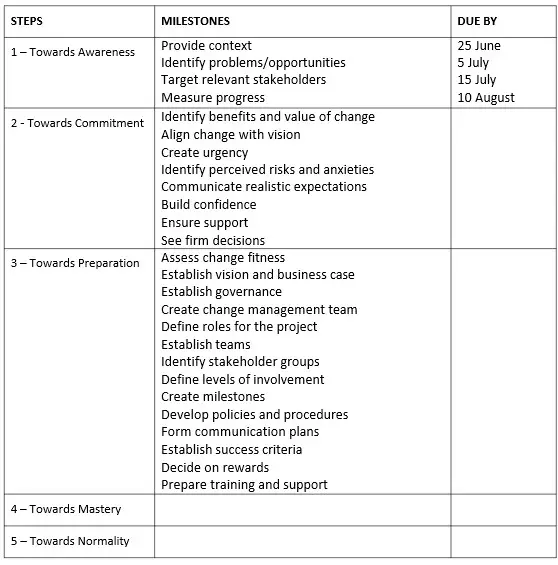
You have already developed most of the elements of your change plan, but you should bring all the pieces together outlining the milestones, which stakeholder groups are involved in each one, and all the change management issues involved. Lay these milestones out in a logical order so they will become short‐term steps towards the long‐term goals.
Using the ideas presented in this document so far, a change plan might look like the table below. You could add additional information, such as who is responsible, etc.