
Build Readiness. Navigate Change.
Readiness Pathways are practical, low-barrier routes that build adaptive capacity —
for individuals, teams, and organisations.
Readiness Pathways
Change is inevitable — but readiness is something you need to navigate. Readiness Pathways are purpose-built, customised, practical, low‑barrier routes that build change readiness in individuals, teams, and organisations. They meet people where they are and guide them step by step toward greater change capability and resilience.
What Are Readiness Pathways?
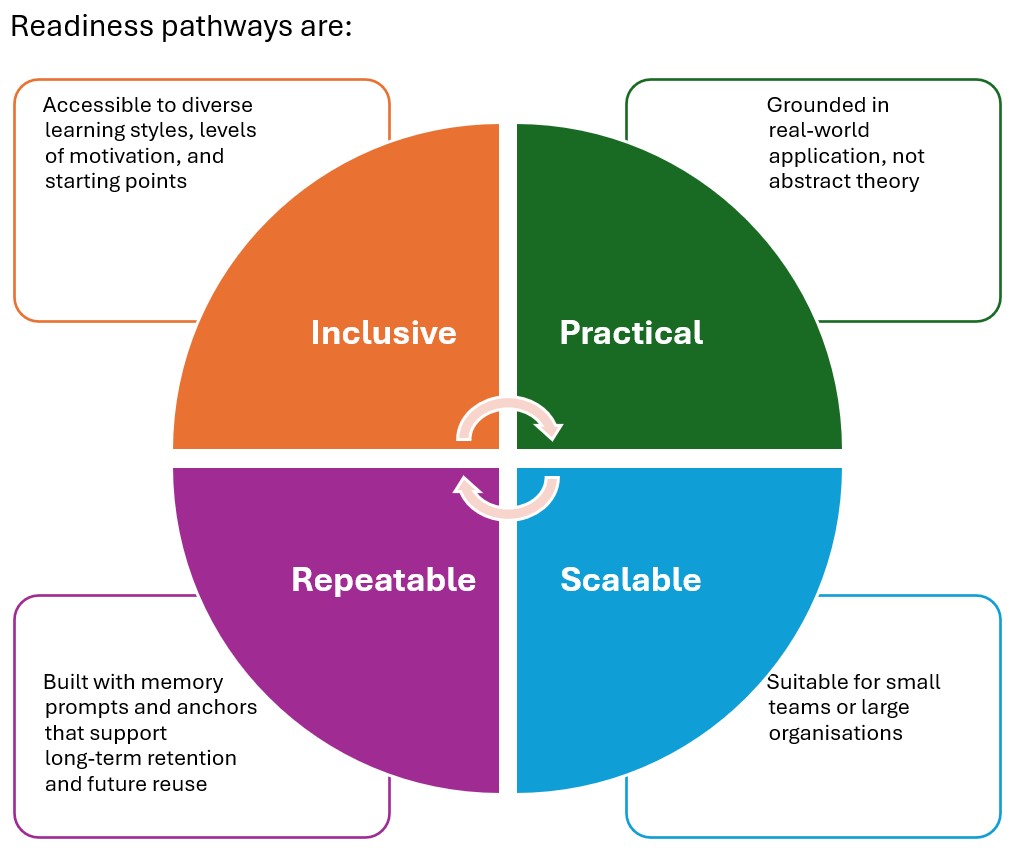
Readiness Pathways are structured yet flexible routes that build adaptive capacity — the readiness muscle that turns disruption into direction.
They are not generic training programs, but rather diagnostic‑driven, adaptive learning sequences that flex to the maturity, culture, and strategic pressures of each organisation.
They break complex transitions into manageable, meaningful stages so that even hesitant or less motivated learners can participate without feeling overwhelmed.
Through Readiness Pathways, leaders and teams develop the confidence, skills, and collective habits needed to deliver under pressure — not just once, but sustainably.
Why They Matter
Ideas don’t fail. Readiness does.
- Diagnose readiness, not just attitude
- Map maturity across teams
- Embed adaptive capacity
- Shift culture from resistance to readiness
The Leadership Role
Leaders activate the pathway.
Readiness isn’t about compliance. It’s about capability, contribution, and collective success.
More Than a Training Tool
This isn’t training. It’s transformation. When embedded into organisational culture, readiness pathways transform change from something people endure into something they can navigate with clarity, confidence, and purpose.