

The thinking behind the method.
Practical, structural reading for leaders and practitioners who want to understand readiness — and put it to work inside real organisations.
See the System
Read the Conditions
Act on the Conditions
Legacy Books
People Get Ready Change Readiness in Organizations (2012)
This early work explores the foundations of organisational change readiness, focusing on the psychological and systemic conditions that enable people to adapt, perform, and thrive through change. Written as a semi‑academic text, it examines why some organisations struggle while others build the internal capacity to respond effectively. People Get Ready represents the first formal articulation of ideas that later evolved into your readiness‑centred frameworks and the Redequip® architecture.

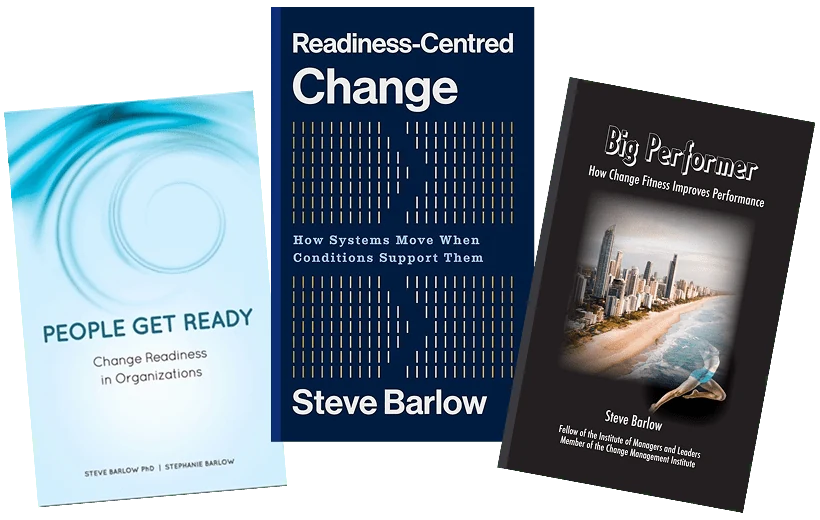
Big Performer How Change Fitness Improves Performance (2021)
Limited Paperback Edition — Direct from the Author
Big Performer shows that improving organisational performance starts with strengthening people’s capacity for change. As the book notes, “the factors that help people change well make them more flexible and increase their performance capacity whether change is happening or not.” It provides a clear, practical framework for leaders who want to lift performance, reduce resistance, and build internal flexibility — not through more KPIs, but by developing the deeper psychological and environmental capacities that drive sustainable execution. This edition represents the early development of the readiness‑centred thinking that now underpins the Redequip® frameworks. A limited number of paperback copies is available directly from the author.
$24.95 AUD + $6.95 postage (Australia‑wide)
The Readiness Series
A structured trilogy for understanding, diagnosing, and creating the conditions for successful change.
This three‑book series distils two decades of research, consulting, and systems thinking into a clear architecture leaders can use to see readiness, understand the forces that shape behaviour, and design the structural conditions that make change possible. Each book builds on the last — moving from Map, to Mechanism, to Method.
Book 1 - Readiness-Centred Change: How Systems Move When Conditions Support Them (The Map)
How to see readiness in action — the patterns, the movement, and the lived experience of change.
This book gives leaders the ability to see what is actually happening during change. It reveals the patterns, the signals, and the dynamics that shape movement long before behaviour becomes visible.
You’ll learn:
how readiness emerges and collapses
the patterns that predict movement
why behaviour is structural, not personal
how to recognise the early signals of change
Ideal for: leaders new to readiness, senior teams wanting clarity, and consultants seeking a shared language.
Book 2 - Readiness-Centred Change: Designing the Architecture That Makes Change Possible (The Mechanism)
The structural architecture behind readiness — the six conditions, the forces that shape behaviour, and the physics of movement.
This book reveals readiness’s internal structure. It explains the six conditions that shape human behaviour, how they interact, and why change succeeds or fails depending on the environment leaders create.
You’ll learn:
the six structural conditions that drive behaviour
how clarity, capability, load, identity, ecology, and alignment interact
why people don’t resist change — they resist conditions
how to diagnose the real causes of hesitation
Ideal for: senior leaders, organisational designers, and practitioners who want to understand the deep architecture of behaviour.
Book 3 - Readiness-Centred Change: Practising the Discipline That Makes Change Possible (The Method)
Coming Soon.
The practical discipline for designing conditions, building capability, and creating readiness at scale.
This book turns the architecture into practice. It provides the tools, methods, diagnostics, and pathways leaders need to design the structural environment that enables movement.
You’ll learn:
how to design conditions for successful change
how to build capability across teams and systems
how to use diagnostics to identify structural gaps
how to create readiness pathways for real organisational contexts
Ideal for: consultants, OD practitioners, and leaders responsible for large‑scale change.
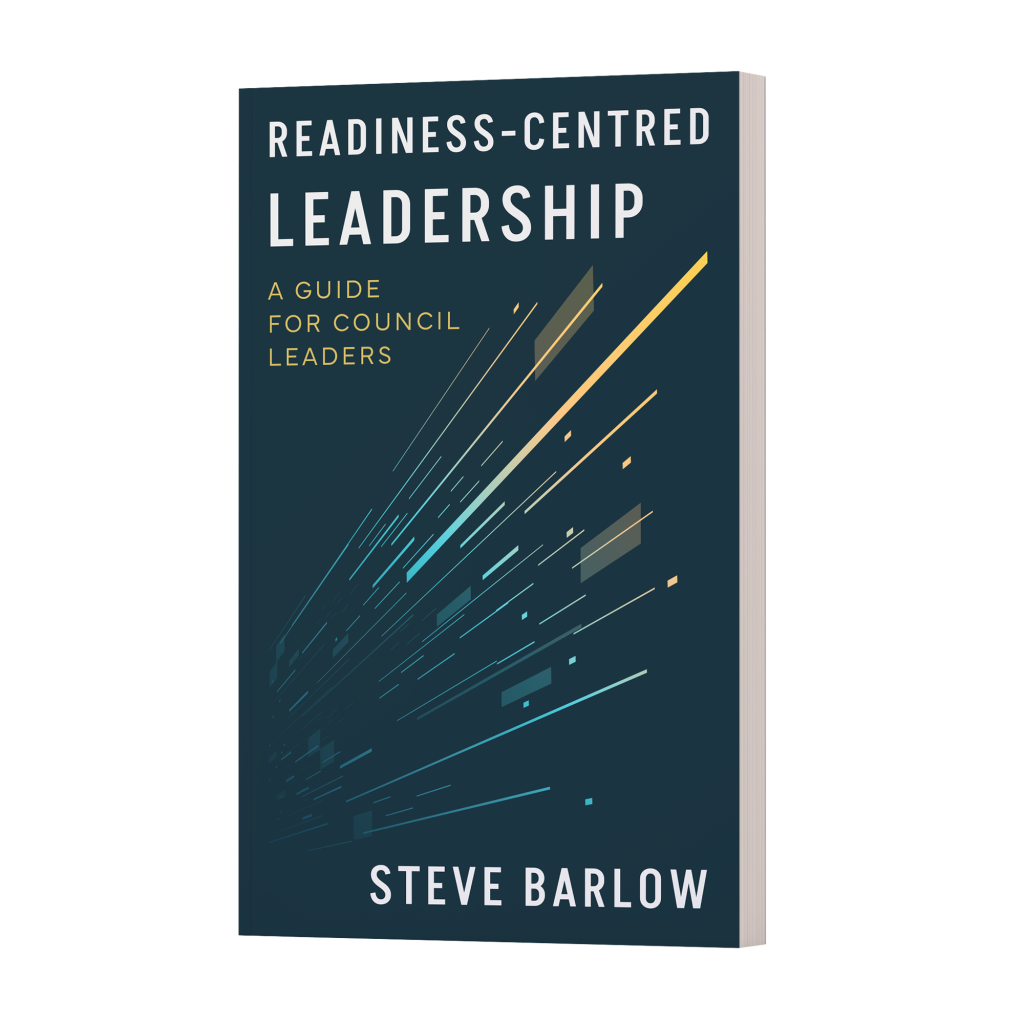
Readiness-Centred Leadership: A Guide for Council Leaders
Readiness-Centred Leadership: A Guide for Council Leaders offers a fresh perspective on why change succeeds or stalls in local government. Rather than viewing resistance as a people problem, Steve Barlow shows how leadership is about creating the conditions that make movement possible. The book introduces a practical framework for understanding how factors such as capability, identity, meaning, organisational conditions, and peer dynamics shape behaviour and readiness for change. It equips council leaders with a new lens for building coherent, resilient organisations that can navigate complexity with confidence.
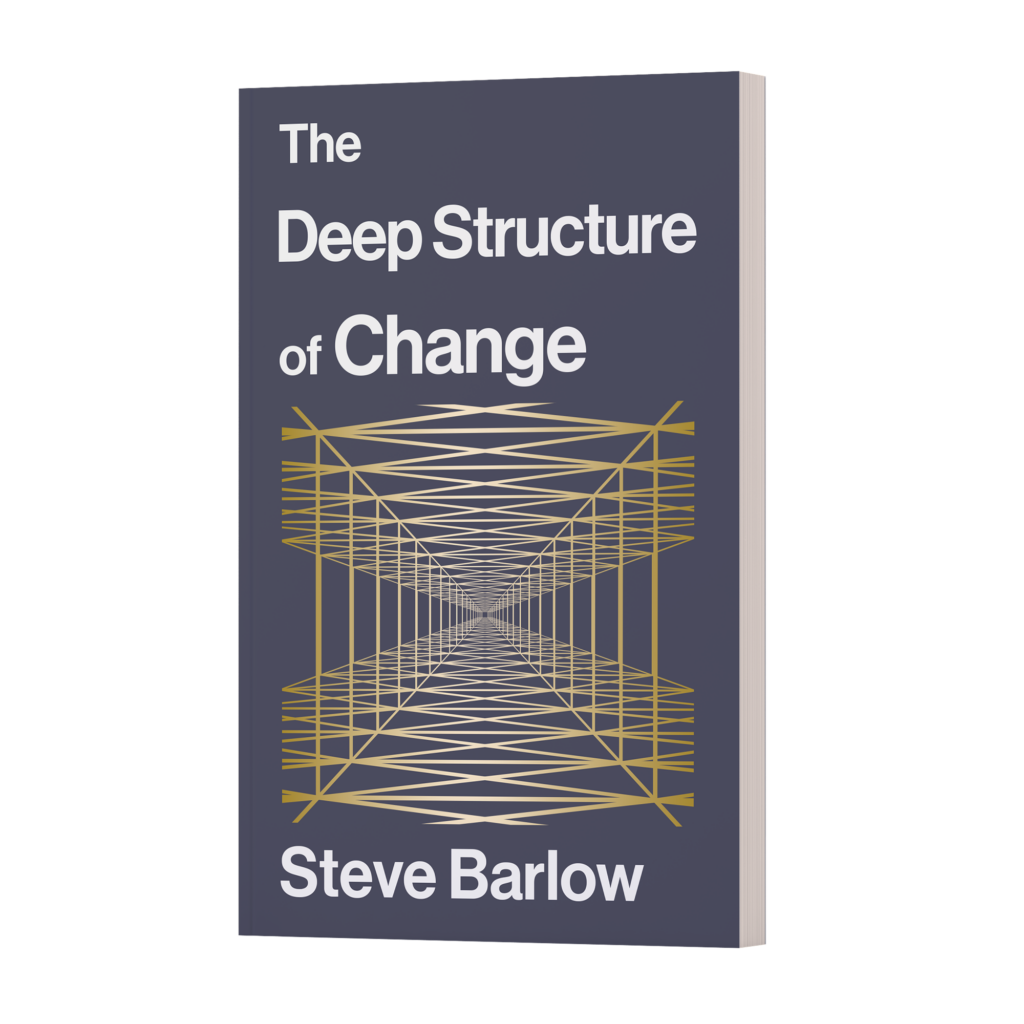
The Deep Structure of Change
The Deep Structure of Change reveals why organisations work hard but struggle to move. Most leaders assume resistance, motivation, or communication problems are the cause of slow progress. In reality, hesitation, tension, reversion, and stalled momentum are structural signals. They point to deeper conditions shaping movement beneath the surface.
This book introduces a structural lens for understanding change. Instead of focusing on mindset or behaviour, it shows leaders how to read the underlying forces that determine whether change is carryable. Clarity, load, alignment, coherence, and confidence are not soft factors; they are the conditions that govern whether effort translates into movement. When these conditions weaken, people don’t resist — the system does.
Drawing on organisational psychology, systems thinking, and decades of diagnostic work, The Deep Structure of Change explains why traditional change methods often fail to produce sustained movement. It shows leaders how to diagnose friction, interpret system signals, and understand the architecture that holds or collapses under pressure. When leaders learn to read these forces, change stops being a push. It becomes something the organisation can actually sustain.
This book lays the conceptual foundation for Readiness‑Centred Change — a way of seeing that helps leaders reduce friction, strengthen conditions, and create environments where meaningful progress becomes possible. It is written for senior leaders, executives, transformation directors, organisational development practitioners, change managers, and consultants working in medium‑to‑large organisations who need a deeper, structural understanding of why change succeeds or stalls.
If your organisation is working hard but not moving far, this book will help you understand why — and what to do next.
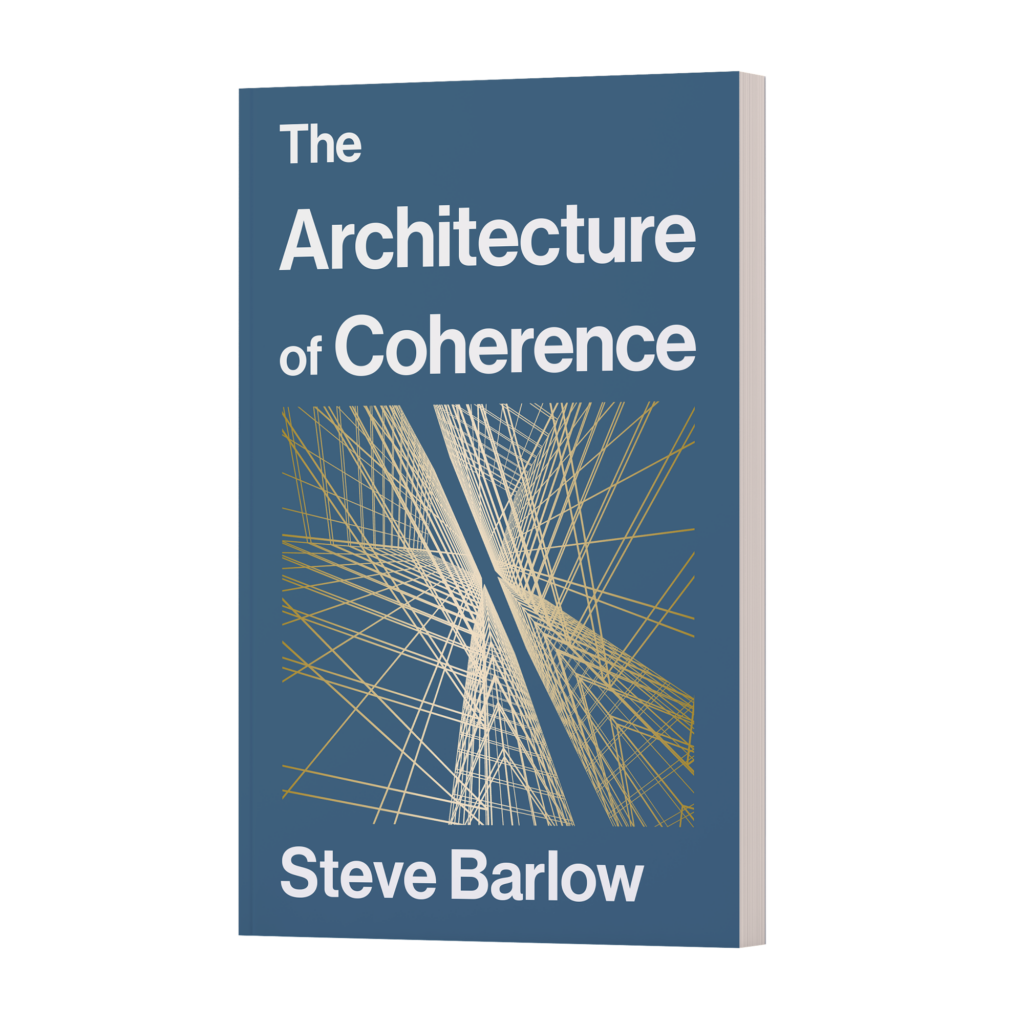
The Architecture of Coherence
The Architecture of Coherence is a way of seeing the organisation beneath the surface. It reveals the conditions that shape behaviour, the forces that stabilise patterns, and the movements that emerge when people work under pressure. Most leaders try to change behaviour directly, but behaviour is only the visible layer of a deeper structure. When the architecture is misaligned, progress feels heavy and fragile. When the architecture is coherent, movement becomes natural and leadership becomes lighter.
Coherence is not culture or motivation. It is the alignment between what the organisation is trying to achieve and the internal forces that support that achievement. It is the moment where expectations, routines, incentives, and decision pathways stop competing with one another and begin working together. Coherence gives leaders structural clarity — a way to understand why the organisation behaves as it does and how to shape conditions that support readiness rather than resistance.
The Architecture of Coherence sits at the heart of Readiness‑Centred Change. It helps leaders see the organisation as a living structure and gives them a practical way to build environments that are easier to lead, easier to work in, and easier to move.
The Fractal Nature of Leadership
Coming 2027.
By Steve Barlow
The Fractal Nature of Leadership explores leadership not as personality, style, or charisma, but as a structural stance that repeats at every scale of an organisation. Leaders shape conditions, regulate pressure, stabilise meaning, and create the coherence in which people can move. This book shows why leadership is less about directing behaviour and more about influencing the forces that shape behaviour. When leaders understand the fractal patterns that govern teams, culture, and organisational movement, they stop pushing for change and start creating the environment in which change becomes natural. This is leadership as architecture — precise, developmental, and deeply human.
Ideal for: consultants, OD practitioners, and leaders responsible for large‑scale change.